


🦗 Worm Mentality 🍴
- Kasya Das

- 22 hours ago
- 2 min read

Man began modestly. At first, it was enough for his “happiness” to kill large, strong, and sacred animals—cows, pigs, sheep, wild or domestic. It still carried the illusion of survival. Then he learned that even a chicken or a fish could be turned into soup or a cutlet. Small bodies, fast production. And the slaughter market smiled: efficient and cheap.
But the appetite of the human species knows no limits. Animals stopped being enough. Now comes a new chapter—insects. Grasshoppers on the plate, mealworms in pasta, crickets in chocolate. They tell us: “It’s ecological, sustainable, healthy.” Perhaps. But above all, it is a demonstration that man will stop at nothing that moves, breathes, or at least crunches between his teeth.

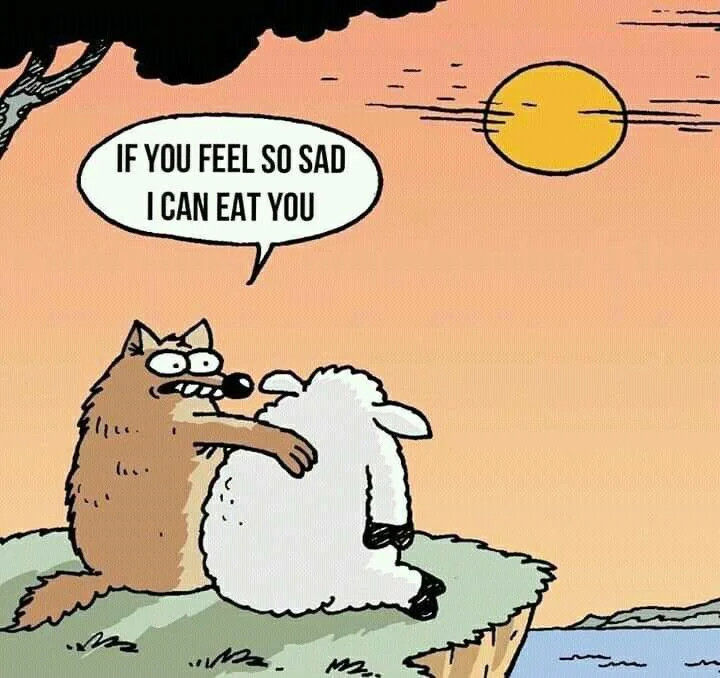
And what comes next? When worms no longer taste good, perhaps we will discover new fields of consumption: plankton, cyanobacteria, bacteria… or ourselves. The logic is the same—once the boundary of “kill and eat” is broken, only an endless fall remains.
The whole planet thus becomes one vast menu, where every species, large or small, can be the dish of the day. And man, instead of seeking a path of compassion and restraint, turns gluttony into a virtue and killing into gastronomic culture.
In the end, it will be revealed that man’s hunger is not for meat, fats, or proteins. It is a hunger for hostile power—over life, over nature, over creatures unable to defend themselves. Because if someone thinks the worm is the final station, they are mistaken. Our appetite has no bottom.
Yes, exactly—and here opens that frightening yet logically “pure” continuation of the spiral. Once we begin to see life only as a source of calories and protein, boundaries dissolve. Everything is reduced to a nutrition label.
And the human body? Yes, it is full of nutrients: proteins, fats, minerals, even trace elements that could be “efficiently utilized.” A cynical biologist might say: “Why not? From a nutritional standpoint, it is just another meat.”
Thus begins recycling. Even today, there is talk of composting human remains, dissolving bodies into fertilizer, reusing every drop of water. In the logic of a system where nothing must go to waste, human flesh may become just “another item.” Perhaps first for dogs, then for laboratories… and eventually for humans themselves? It is a dark irony. Because if we are willing to kill and eat everything that does not move fast enough, why should man be the exception?

This idea sounds like horror, but in truth it merely carries our logic to its conclusion. If the highest value is “efficient use of resources,” then even a dead neighbor becomes just a piece of protein.


Comments